Substitute
A song came out of a random playlist and my feet knew it before I did. Clout. Substitute. It took me back to 1978 — and to the substitutes I was handed, the ones I made, and the one I am still holding.

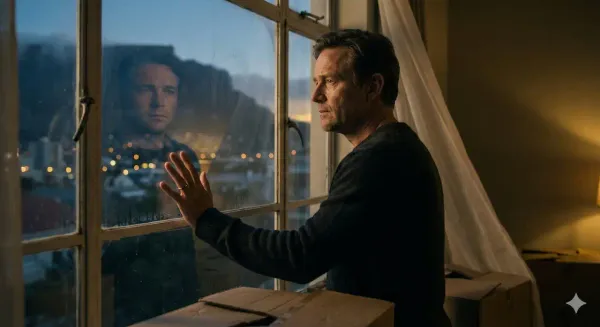
The other day, in the lounge of a Cape Town house that is not yet home, a song came out of a random playlist.
We'd just moved. The lounge was filled with boxes, furniture and decisions still to be made.
I had not heard it for the longest time — thirty years at least. Yet within half a bar I knew it.
My feet knew it too. Before I had even placed the song, they had started moving.
Clout. Substitute.
It took me straight back to our family lounge and the summer of 1978. The hit parade belting out on the radio. Warm, dry days that seemed to linger, when time slowed to a crawl. Television was still new and only came on at six. The radio filled the day.
My father was a musician, so music was always playing in our home. So many happy memories are stored as songs in my being. Usually it takes only half a bar and I am there: the room, the place, the time, the boy I was when I first heard it.
This song still reaches. The singer's voice climbs into the ache of offering herself as second choice, to stand in for someone who is not coming back. There is no answer. The song simply fades while she is still reaching.
Back then, I knew enough to hear the anguish and not enough for it to interrupt the pleasure. We listened. We sang. We bopped to it in the lounge.
Forty-eight years later, in another lounge, I did the same.
The house around me was still unfamiliar. The song was not.
This song took me back to time of Springbok radio, the music charts of the day. What I know now, that I didn't now then, was that many of the hits on the Springbok Hits albums were covers of the originals. As a child, I was oblivious. I just enjoyed the songs, the time, the music.
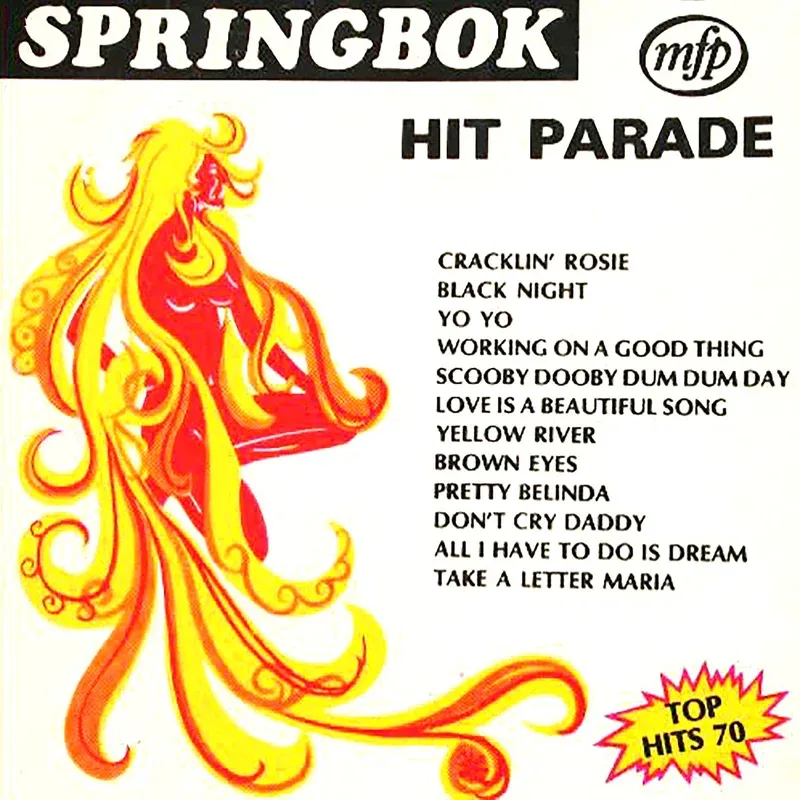
The songs were substitutes.
Another substitute — Seventeen. Conscripted clueless. Boot camp did its work and I believed it.
The war on the border was about the terrorists. Bags searched going into shops. Bins gone from the streets. The bombings were real — Church Street, Amanzimtoti, the Durban beachfront. It was not paranoia. But on the battlefield, there were dead Cubans, Angolans. It was a crack I didn't fully see at the time — 'loose lips sink ships' and all that.
But the question lingered: why are we fighting Cubans?
Boot camp put two true things side by side and let me draw the line between them myself. The state did not invent the threat. It took two true things — they train in Angola, they bomb shops at home — and let the two facts carry a conclusion that was false: that the war I was in was that war. It was not.
A substitute assembled from lies is easier to see. One assembled from true parts is the kind few see right off the bat.
I didn't.
My intense experiences on the battlefield were brief and few. A mortar attack one night. Helicopter trips in, casevacs out. I did not face the bullets, but I did handle the body bags and carry the writhing injured.
What I did do a lot of, was check and sign off planes loaded with bombs. Then when they came back, bombs gone, I fixed the snags, performed the routine checks and signed them off, certified them fit-to-fly. All while more bombs were loaded onto them again. Day in, day out.
I never really got to the, "where are those bombs landing?".
I just did what I was told. Never questioning. I performed my tasks with diligence, care and attention to detail. I was good at my job keeping the aircraft airworthy.
During COVID, I was watching a war movie. The heroes jumped into a helicopter and flew into a war zone. And I felt a strong emotion rise, tears forming in my eyes and I choked it down. It wasn't the first time that happened, but it was the first time I asked myself why this strong emotional response to a movie.
And as soon as I stopped to ask that question, more flooded in. So I started YouTubing the South African Border War. Then I read the Wiki's pointing to the operations I was a part of. The operation names were familiar, the details were filled in. The Menongue–Cuito Cuanavale supply route was known to me then, that the bombs landed there was new.
As I watched, read, an incomplete puzzle formed into a picture. Having learned where those bombs fell, exposed my naïveté and my complicity. The state had justified sending us to fight a war by stating disconnected truths. All it took was people like me who were good at their jobs and didn't ask questions.
What if I had asked more questions, resisted conscription, informed myself? Why didn't I stop and ask those questions, connect those dots?
Every war has a soundtrack.
The Allies in the Second World War had Vera Lynn’s “We’ll Meet Again”. The French Foreign Legion had the Édith Piaf song “Non, je ne regrette rien” (No, I regret nothing). The Vietnam War had many, but the one that comes to mind is Creedence Clearwater Revival’s “Fortunate Son”.
All those war songs are mine as well. I grew up listening to them on my dad’s reel-to-reel tape recorder. Those very songs played in that same childhood lounge. There was also a projected “home movie” of Kelly’s Heroes in our garage with friends. “Burning Bridges” is etched in my brain and heart in a deep way.
When Hollywood movies of the Vietnam War show scenes of the Huey helicopters flying into the war zone, and “Fortunate Son” plays, I think of “I Wonder” from Cold Fact.
I was first exposed to Rodriguez in Grade 10. In those days we decorated our canvas school bags with art and symbols. My bag had a Van Halen logo that I’d drawn onto it. The girl sitting in front of me had Rodriguez’s Cold Fact on her bag. Curious, I asked her about it. With shock, she responded, “You don’t know who Rodriguez is?” I didn’t. The next day she brought a Cold Fact cassette tape to dispel my ignorance.
She was very bohemian — a strong statement in a very conservative country at the time. Her anti-conformist yet gentle nature appealed to me. So did Cold Fact. It was very anti-establishment, questioning of the status quo. Its unusually candid lyrics about institutional hypocrisy echoed a critique of our own tightly managed society. The anti-war songs of the sixties, and the hippie movement that had gathered around them, were not far behind us. Those songs had played in our lounge.
By the time I was conscripted, Cold Fact was my album of the Border War, and I believed Rodriguez was dead. That he shot himself on stage after a bad gig. Some said he burned himself alive in front of the crowd as a protest against the establishment.
Then Cape Town fans Stephen “Sugar” Segerman and Craig Strydom established in the mid-1990s that he was alive in Detroit. In the Academy Award-winning documentary Searching for Sugar Man (2012), they revealed that Rodriguez, after the failure of his albums, had bought a derelict house on a government auction for fifty dollars and gone into demolition work.
It turned out that he had toured Australia twice while we believed a lying legend.
A singing poet who made his final stand against the establishment on stage was more believable to us than a labourer who could not get a gig. The substitute was better than the man. It usually is. That is why we keep making them.
I did. I still do.
I had just stepped into a new business venture: importing and selling laminated bamboo timber boards. People couldn’t imagine them. So I had to help them see it. I built a narrative for Google AdWords: bamboo as an alternative to granite. A countertop not cold and clinical, but warm, alive. A space where kids could do their homework while dinner simmered nearby. The campaign worked.
And then, one day, I saw her. She pulled up in a high-end SUV, alone, hesitant, and stepped out in heels and sunglasses into an industrial timber yard — table saws screaming in the background, wood dust hanging in the air. She glanced around, visibly uncomfortable. I had drawn her here, into a world that wasn’t made for her. I had crafted a compelling story. But it wasn’t a whole one. It was beautiful — but not truthful.
I had grown up inside a far bigger one. The Coke of my childhood was “the real thing”. The bottle, the logo and the slogan were advertised to the point of ubiquity, until nobody thought to ask what the thing was. It was sugar. Today it is acknowledged as a big contributor to the obesity crisis; some call sugar the new smoking. A sugar-laden drink was the real thing, and we believed it. I believed it.
Mine was not the only campaign I ran. There were many more on Google and Facebook, optimising the targeting on user profile and intent. I studied Hooked as part of my marketing work. I was good at this work too.
None of it needed a lie. It needed true things, well arranged, and someone good at his job who did not ask whether the story and the thing itself matched.
Forty years on, I can now see that we were not the only ones handed a substitute. By the account of the news and the court cases, the change promised after 1994 has largely not reached the people it was promised to; the connected seem to have benefited most. The substitution did not end in 1994 — it changed beneficiaries.
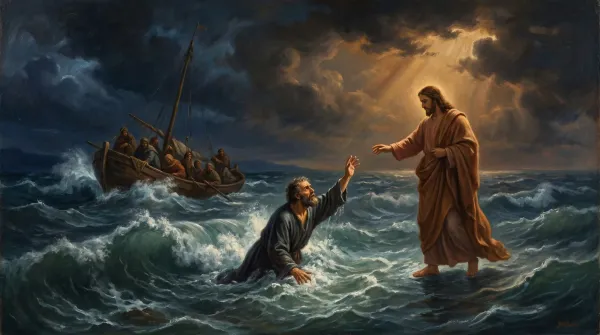
Jesus did not blame ignorance. He went straight at competence.
“You are experts at setting aside the commandment of God in order to keep your tradition.” (Mark 7:9, NASB95)
Experts — the best religious men in the room. They were substituting rules for relationship, and their mastery of the rules was precisely what kept them from seeing what they had done. Then the real thing stood in front of them, breathing, and they could not see Him. Their competence did not expose the substitute. It protected it.
The song covers, the war, the dead poet, the campaign, the Coke bottle and the promise all had competent people keeping them believable. None of those substitutes stayed in the air through stupidity. They stayed there because people knew exactly how to do their part.
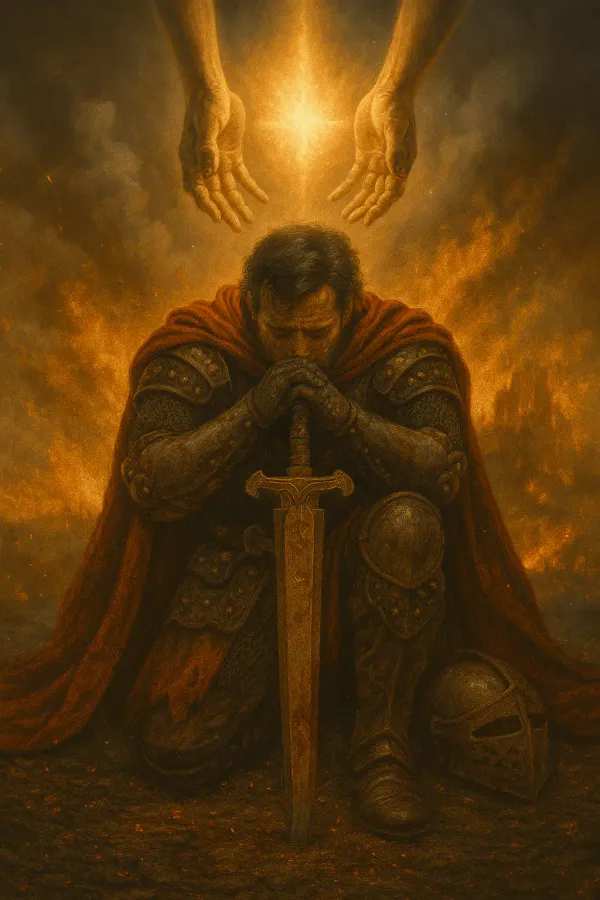
That is the part I cannot leave with the Pharisees. I kept aircraft airworthy. I learned to arrange true things into stories people wanted, I wanted. I was good at both. Competence gave me somewhere to hide.
The “real thing” I grew up with came in a Coke bottle. John 1 shows me the real thing — what a real human looks like. Not a slogan. Not an image managed into belief. HIS image — human. A life with no gap between what is seen and what is true.
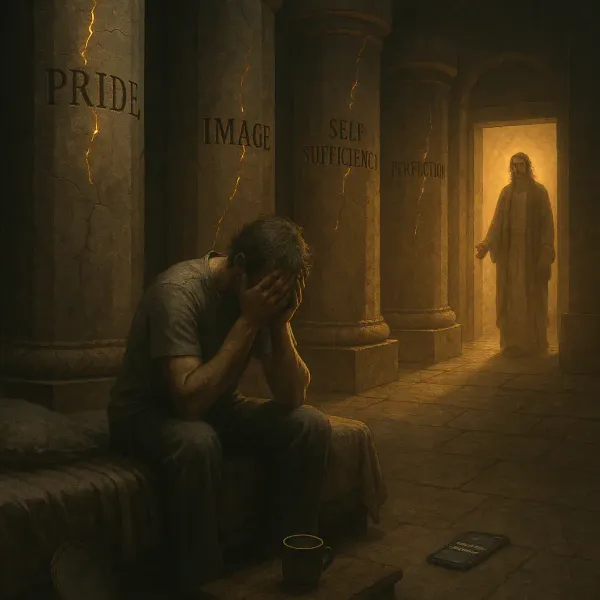
Our image is the one I arrange, polish and defend until even I believe it. It can be beautiful. It can be religious.
It is still a substitute.
The house is not yet home. Everything here is still somewhat unfamiliar — church, work, people, roads. My sons and my sister are still in KZN. My wife and I are making the lounge a safe place.
Earlier this year, at the threshold of this move, I wrote in The Other Country that “once the past becomes the judge, the present is always found guilty.”
The songs offer comfort. I know what nostalgia is doing, and I take it.
This one I can see.
I am still holding it.
I sent this note to my sons in reply to a question one of them asked …
First identify the substitutions we commonly wear — the stories we tell ourselves.
<snip>
…
Cynicism presents as realism.
And the most common one: fear dresses up as diligence.
…
<snip>
The question in the note is mine too: Am I going to continue with this response, or am I going to admit to myself what is really going on with myself?
Something happens — a circumstance, an interaction — and the narrative starts up inside me. It justifies. It desires. It longs. It feels.
I ask it: is this true? GOD TRUTH true?
Then I face the thing, and ask HIM for help.
And I listen.
And often the answers are hard to sit with, harder to hear, and sometimes crushing to admit.